Traditional Russian New Year Foods & Recipes
In Russian culture, New Year (Новый год) is the biggest celebration of the year — bigger than birthdays, bigger than Christmas in the Soviet tradition. The table is built over several days. Families make salads on December 29th, prepare the main dishes on the 30th, and spend December 31st cooking, setting the table, and waiting.
The feast that appears at midnight on New Year's Eve is specific, largely unchanged for decades, and deeply tied to memory. Here is what belongs on it.
The Must-Have Dishes
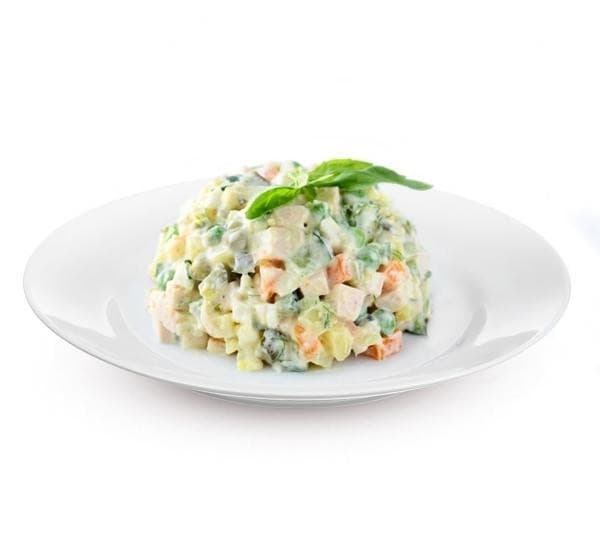
Olivier Salad (Оливье)
The centerpiece of every Russian New Year table. If there is no Olivier, it is not New Year. Stores sell out of ingredients every December — boiled potatoes, carrots, green peas, pickles, eggs, and mayonnaise move off shelves in the week before December 31st.
Ingredients:
- Boiled potatoes and carrots, diced small
- Hard-boiled eggs, diced
- Pickles (dill pickles or cornichons), diced
- Bologna (doktorskaya), boiled chicken, or cooked beef, diced
- Canned green peas, drained
- Russian mayonnaise — the binding ingredient
Tips for authentic Olivier:
- Use Russian mayonnaise, which is richer, more egg-forward, and less acidic than American mayo. Provençal brand is the standard.
- Cut everything into small, uniform cubes — 5-7mm. The uniform cut is important for texture.
- Make it the day before. The flavors meld overnight and it improves significantly.
- Serve cold, directly from the refrigerator.
The salad should be moist but not swimming in mayo. The ratio: enough mayo to bind and coat every cube, not enough to make it wet.
Herring Under a Fur Coat (Селёдка под шубой)
Named for the colorful vegetable layers that cover the herring — the "fur coat." This layered salad is as visually striking as it is flavorful, and it reveals its layers beautifully when sliced.
Layers (built in this order from bottom to top):
- Salted herring, cleaned and finely chopped — the base
- Boiled potatoes, grated coarse, spread flat, light mayo coat
- Boiled carrots, grated, spread flat, light mayo coat
- Hard-boiled eggs, grated, light mayo coat
- Boiled beets, grated — the top "fur coat" layer in deep purple
Chill for several hours before serving. When you cut through it, the layers are visible — white, orange, yellow, purple. Serve in slices.
Meat Aspic (Холодец / Студень)
Savory jellied meat — pork or beef broth cooked for hours (often overnight) with pig's feet or other collagen-rich cuts until the broth naturally sets into a firm jelly when cooled. Pieces of cooked meat are suspended in the jelly.
Served cold from the refrigerator, in slices, with prepared mustard and horseradish. An acquired taste for non-Eastern Europeans, but a New Year staple that many families make in large quantities.
Caviar on Blini
Red salmon caviar (ikra) served on thin buckwheat pancakes (blini) with smetana — one of the few genuinely luxurious items that appears at New Year even in ordinary households. Red caviar is affordable by international standards and widely available at Eastern European grocery stores.
How to serve: Warm the blini, spread a little butter first, add a spoonful of caviar, top with smetana. Eat immediately. The warmth of the blini releases the flavor of the caviar.
The Broader New Year Table
Beyond the signature dishes, a complete New Year zakuski spread includes:
- Pickled vegetables — cucumbers, tomatoes, marinated mushrooms. These cut through the richness of everything else.
- Cold cuts — sliced kolbasa (doktorskaya, krakovskaya), smoked fish, pâté
- Borodino bread — dark rye for the cold cuts and fish
- Tangerines — the scent of tangerines is synonymous with Russian New Year. Every household has a bowl of them on the table.
Drinks
Russian sparkling wine (shampanskoe) — The traditional midnight toast is made with Russian-style sparkling wine, not French Champagne. It is less dry and sweeter than Western sparkling wine. Part of the tradition.
Kompot — Non-alcoholic fruit punch from dried or fresh fruits, usually served alongside for those not drinking.
The Celebration Timeline
December 31st:
- Throughout the day: final cooking, table setting
- 11:55 PM: Watch the President's New Year address on television
- 11:59 PM: Kremlin clock chimes begin the countdown
- Midnight: Champagne toast, fireworks outside, wishes exchanged
Traditional ritual: Write your wish on a piece of paper, burn it, add the ashes to your glass of champagne, and drink it before the clock finishes chiming. Whether this works is a separate question.
Movie Tradition
Every Russian family watches "The Irony of Fate" (Ирония судьбы, или С лёгким паром! — 1975) on New Year's Eve. It is a romantic comedy about a man who accidentally ends up in Leningrad after a New Year's Eve gathering. It has aired on Russian television around New Year ever since (it first aired January 1, 1976). For Eastern Europeans, it is as inseparable from New Year's Eve as fireworks.
Shopping for New Year at Kalinka
We stock all the ingredients for an authentic Russian New Year table:
Deli counter: Doktorskaya and krakovskaya sliced fresh, smoked fish, sometimes pre-made Olivier and herring fur coat during the holiday season
Seafood: Salted herring for fur coat salad, red salmon caviar (ikra), smoked fish
Produce and dairy: Fresh beets and carrots for the salads, Russian mayonnaise (Provençal), smetana, fresh dill
Bread: Borodino rye loaves
Beverages: Kompot, kvass
Questions about holiday salads or what we have in stock? Call us: (360) 666-6919
Kalinka Euro Market 813 W Main St UNIT 110, Battle Ground, WA 98604 Open daily 10 AM – 8 PM
Related Articles
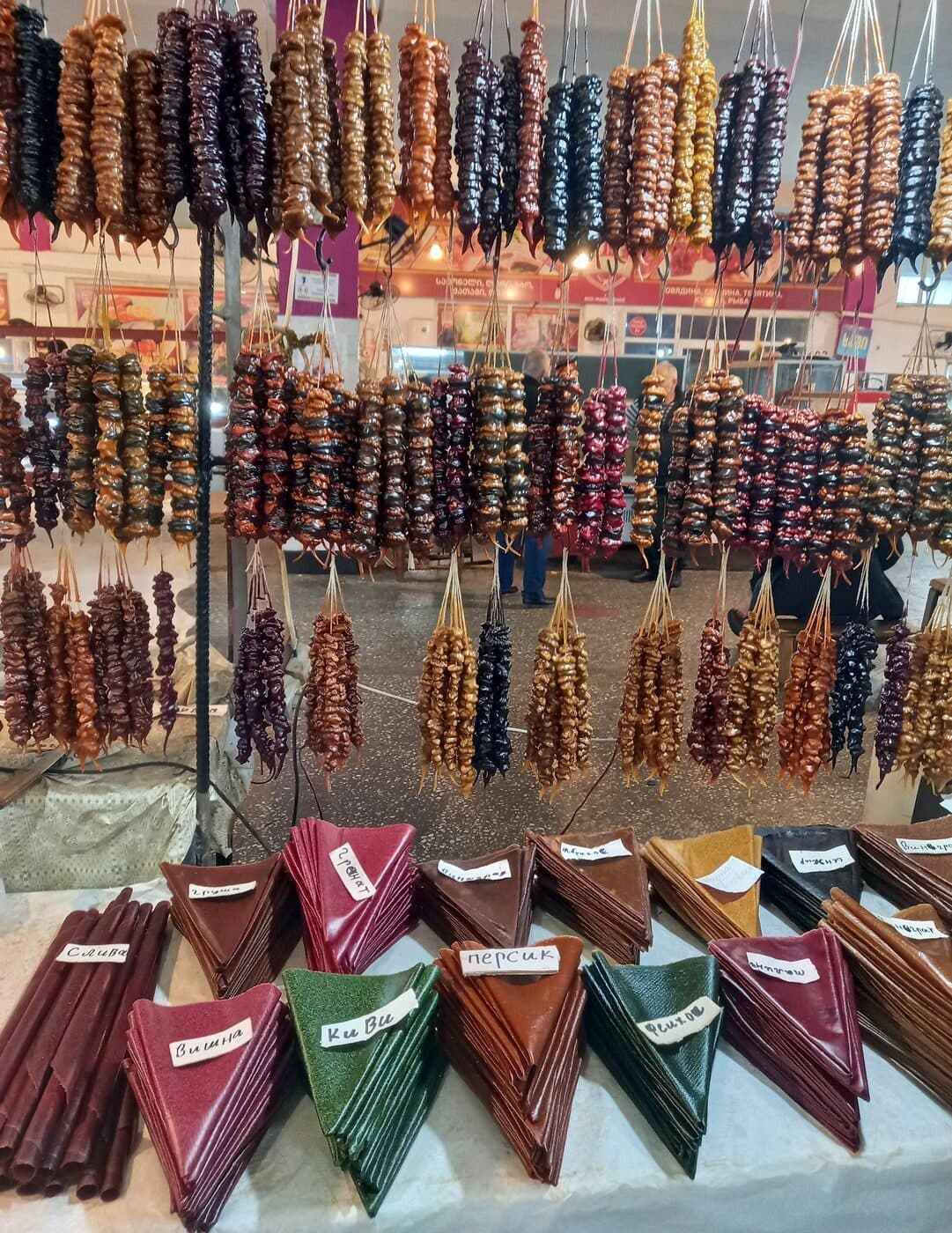
What Is Churchkhela? The Georgian "Candle Candy" You Can Find Near Portland
If you've ever seen what looks like colorful candles hanging in an Eastern European shop, that's churchkhela, a Georgian candy made from grape juice and walnuts. Here's what it is, how it's eaten, and where to find Georgian sweets near Vancouver and Portland.
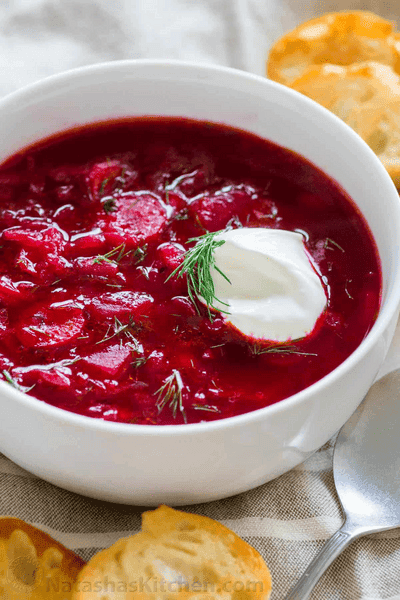
How to Make Authentic Borscht: The Classic Eastern European Beet Soup
Learn to make rich, vibrant borscht from scratch using traditional Eastern European methods. Step-by-step recipe with tips on keeping that beautiful deep red color.
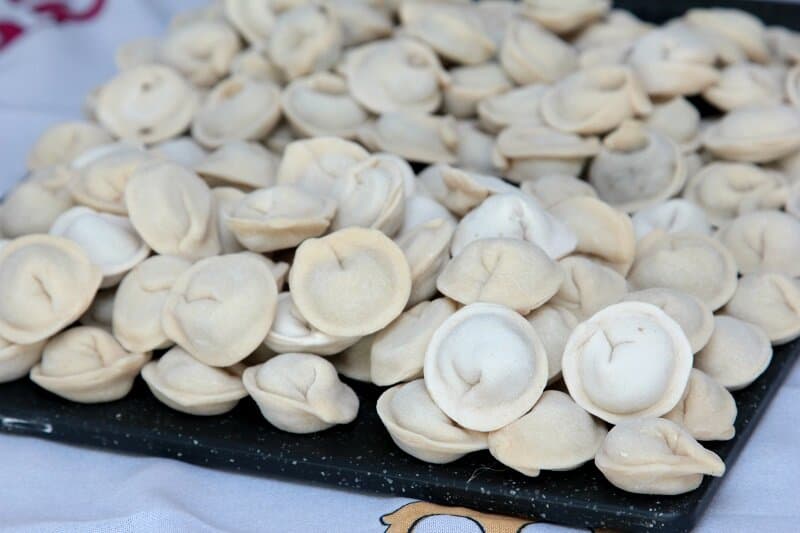
How to Cook Perfect Pelmeni: A Complete Guide
Master the art of cooking Russian pelmeni with our step-by-step guide. Learn traditional boiling, pan-frying, and serving methods used in Russian kitchens for generations.
Ready to Cook Something Delicious?
Visit Kalinka Euro Market for authentic Eastern European ingredients, fresh house-made pelmeni, and expert advice.